
What Is a Humectant — and Why It Matters in Soap

If you’ve ever stepped out of the shower with skin that feels tight or stripped, you’ve felt the difference between a cleanser that simply removes dirt — and one formulated to support moisture.
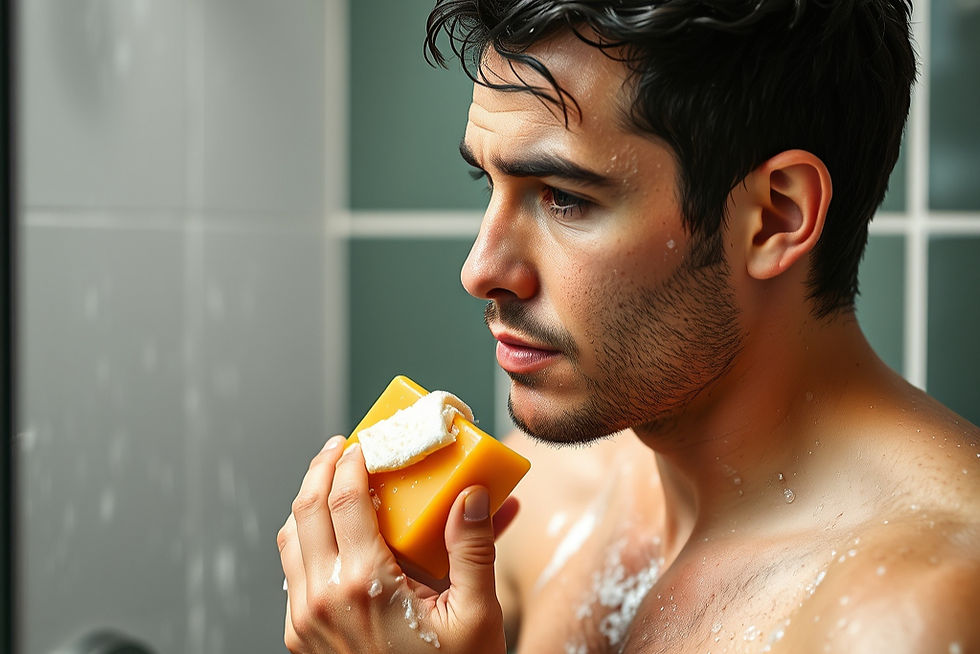
That difference isn’t accidental. It comes down to how a bar is made, what remains in it, and how intentionally its ingredients work together. One often-overlooked factor is the role of humectants.
In this post, we’ll explore what humectants are, why they matter even in rinse-off products like soap, and how ingredients such as honey influence how a bar feels during and after cleansing.
What Is a Humectant?
A humectant is an ingredient that attracts and holds moisture. In skincare, humectants help reduce moisture loss and support a more comfortable, hydrated skin feel after washing (Verdier-Sévrain & Bonté, 2007). Well-known humectants include glycerin, honey, and aloe vera.

Here we focus on honey, one of the oldest and most well-studied natural humectants used in topical products.
Why We Use Honey as a Humectant
Honey functions as a naturally occurring humectant, drawing moisture toward the skin while also contributing antioxidants and skin-conditioning compounds (Bogdanov et al., 2008).
In soap, honey also:
Enhances lather quality
Supports a smoother post-wash feel
Helps offset the drying nature of cleansing
That’s why honey is a key ingredient in several of our bars.
How Honey Works Alongside Naturally Formed Glycerin in Soap
In traditionally made soap, glycerin is naturally produced during saponification — the chemical reaction between oils and lye. Unlike many commercial soaps where glycerin is removed, this naturally formed glycerin remains in the bar and acts as a powerful humectant, helping bind water to the outer layer of the skin during cleansing (Verdier-Sévrain & Bonté, 2007).
It’s important to clarify that adding honey does not increase glycerin production. Glycerin formation is determined by the soapmaking process itself. What honey does contribute are additional naturally occurring humectant sugars — primarily glucose and fructose (Bogdanov et al., 2008).

These sugars attract and hold water through mechanisms similar to glycerin. When used together in a well-formulated soap, glycerin and honey create a complementary moisture-support system that can help reduce moisture loss during washing and improve how skin feels immediately after rinsing, particularly for dry or sensitive skin types (Lodén, 2003).
Honey also enhances lather quality. Its sugar content increases bubble formation and creaminess, helping distribute glycerin more evenly across the skin during washing and reducing friction for a gentler cleansing experience (Mitsui, 1997).
In short, honey doesn’t replace or alter glycerin — it complements it, supporting moisture retention and post-wash comfort without changing the fundamental chemistry of soap.
But Does a Humectant REALLY Matter in Soap If You Rinse It Off?
Short answer: yes — when formulated thoughtfully.
Even in rinse-off products like soap, humectants can:
Reduce moisture loss during cleansing
Improve skin comfort immediately after rinsing
Support the skin barrier during frequent washing
Research shows that humectants such as sugars can bind water at the skin’s surface, helping counteract the drying effects of surfactants during cleansing (Lodén, 2003). This is especially beneficial in cold weather, low humidity, or for those with dry or sensitive skin.
Our Honey Soaps
Our honey soaps are crafted to be gentle, nourishing, and comforting — especially loved by those with dry or sensitive skin. Honey helps attract and retain moisture while contributing to a soft, creamy lather.
Blended with thoughtfully chosen botanicals and skin-loving oils, these bars balance simple luxury with effective care. From bright citrus blends to calming, oat-rich favorites, each honey soap is designed to support healthy skin while turning daily routines into small moments of comfort.
Available varieties include:
Oat Milk + Honey — gentle and ideal for dry or sensitive skin
Orange Honey + Turmeric — bright, warming, and a winter favorite
Honey + Lemon — fresh, uplifting, and perfect for morning showers
Lavender + Oatmeal — grounding, soothing, and made for moments of rest

Our honey soaps are available through our website, our store at 208 N. LBJ Drive in downtown San Marcos, TX, and at local weekend markets.
Because all bars are made in small batches, availability may vary by scent and batch.
Here they are! Enter DREAMY in the promo code at check out for 15% off.
Oat Milk + Honey — a gentle, everyday bar designed for dry or sensitive skin
Orange Honey + Turmeric — bright, warming, and especially loved in winter
Honey + Lemon — fresh, uplifting, and perfect for morning showers
Lavender + Oatmeal - gentle, grounding, and made for moments of rest
When used with intention, ingredients like honey can make a noticeable difference — even in soap.
Thoughtful formulation is quiet — but you feel it. And once you do, it’s hard to go back.
Curious to feel the difference for yourself? Explore our honey soaps and discover how thoughtful formulation can change the way your skin feels after every wash. Enter DREAMY in the promo code at check out for 15% off your order.
If you made it this far — thank you for reading. If you enjoyed this post, tap the heart 💖 and let us know in the comments how you use honey in skincare.
Treat yourself — and your skin — well,
Michael and Kevin
References
Bogdanov, S., Jurendic, T., Sieber, R., & Gallmann, P. (2008). Honey for nutrition and health: A review. Journal of the American College of Nutrition, 27(6), 677–689.
Lodén, M. (2003). Role of topical emollients and moisturizers in the treatment of dry skin barrier disorders. American Journal of Clinical Dermatology, 4(11), 771–788.
Mitsui, T. (1997). New cosmetic science. Elsevier Science.
Verdier-Sévrain, S., & Bonté, F. (2007). Skin hydration: A review on its molecular mechanisms. Journal of Cosmetic Dermatology, 6(2), 75–82.


Comments